
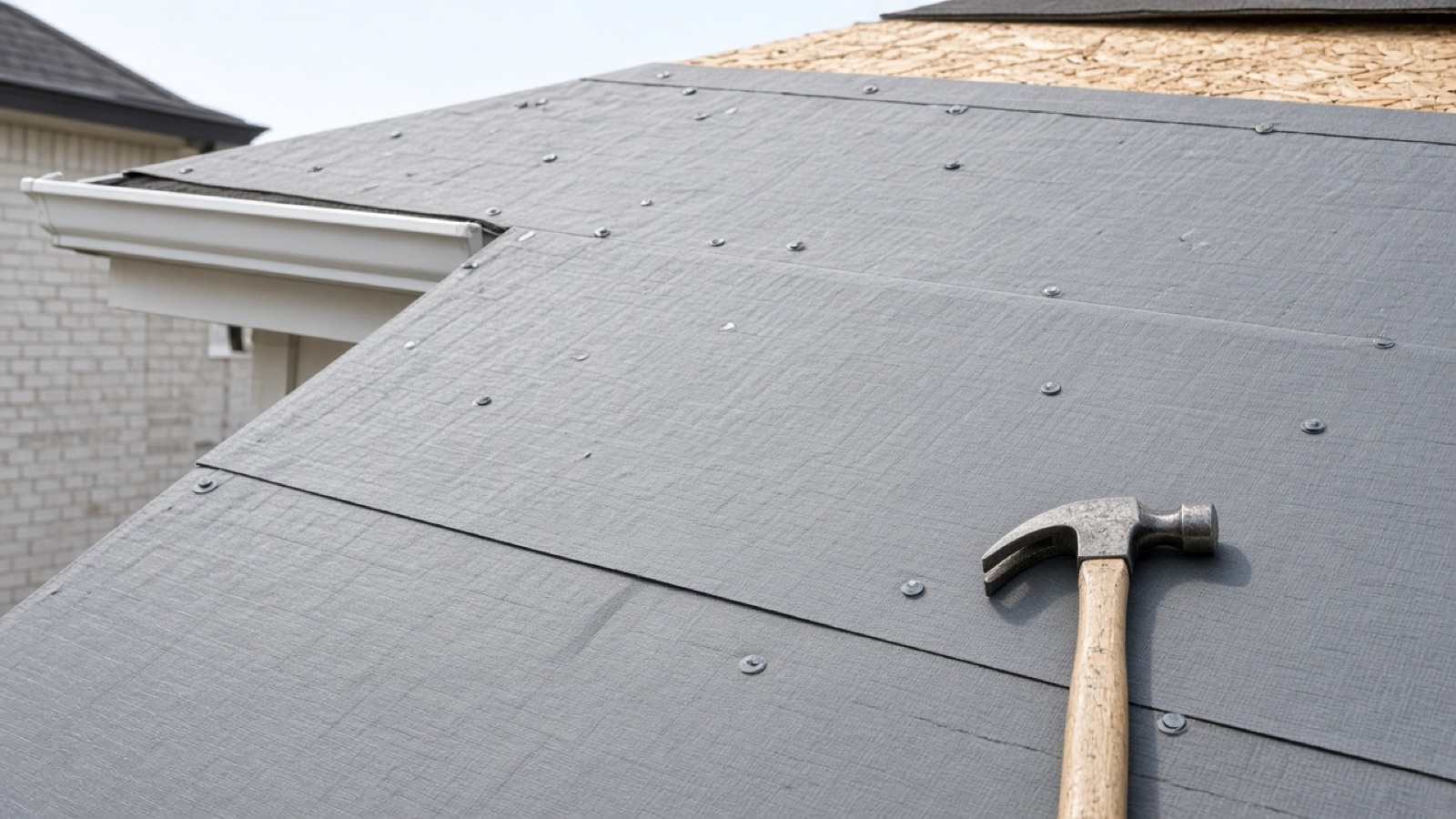
Shingles shed water. The sheet under them is the second chance, the layer that has to survive a blown-off tab, a torn valley, or the afternoon the new roof is on and the sky opens before the ridge is capped. In this heat, that sheet is not a place to save the bid.
Felt that has become part of the deck
Old organic felt dries out, cracks, and glues itself to the plywood. On a tear-off it comes up in scraps and takes time, which is why some crews want to shingle over it. Overlaying a cracked sheet is how you trap the last roof’s problems. We take it off. If the deck has to be scraped, that is part of the day, not a surprise fee invented because the felt fought back.
Synthetic underlayment is the replacement we specify under asphalt. It does not absorb water the way felt does if a storm hits mid-job, and it holds up under a dark shingle that runs hot from April through October. “Felt” on a 2026 bid for a full replacement is a question, not a default. Ask which product, and whether it is the whole field or only a starter strip of something better.
Where we still use a sticky sheet
Valleys, eaves, and the deck around penetrations get a self-adhered membrane, the peel-and-stick sheet. Houston is not an ice-dam climate. We use it because wind drives rain uphill and because those are the places a shingle roof leaks first, not because a northern code detail wandered onto the job. The field stays synthetic. The details get the belt.
If you are comparing asphalt shingle prices, put the underlayment on the same line of the spreadsheet as the shingle brand. A pretty laminate over a bargain sheet is a cheap roof with an expensive color. Request a free inspection or call (281) 541-0027.