
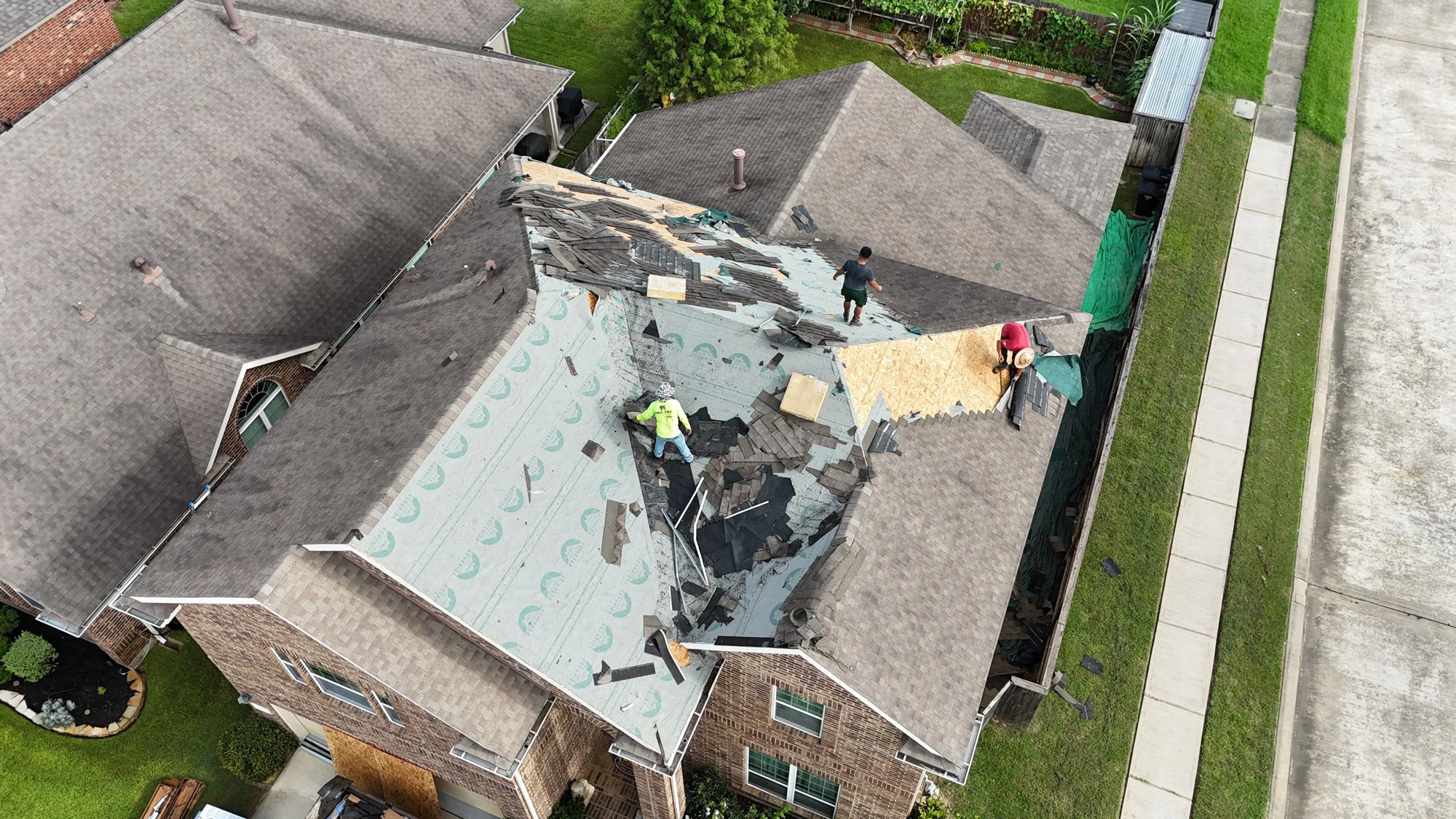
A blue tarp is a tool, not a roof. Used on the spot that is leaking, held so the next thunderstorm does not turn it into a sail, it buys you time. Spread across a whole slope and shot full of nails, it wrecks shingles that hail only bruised.
When you need one
You need a tarp when water is entering the house or the deck is open to the sky. You do not need one because the roof looks spotted and a canvasser said the insurance clock is running out tonight. Missing tabs over an intact underlayment can often wait for daylight and a dry forecast. An open hole cannot.
What a careful tarp looks like
It covers the opening and reaches a high point so water runs onto it, not under it. On a shingle roof that usually means going over the ridge, or at least well above the damage, and fastening where the nails will be covered by the eventual repair. The edges are tight enough that wind cannot get underneath. There are not a hundred screws in the middle of good shingles “just to be sure.”
Stay off the roof while it is wet. If the ceiling is dripping, bucket it and call. Our storm emergency crew tarps from Tomball. The Houston homeowner storm checklist covers what to photograph while you wait.
After the water stops
A tarp left for months cooks the shingles under it and hides the deck from everyone who needs to see it, including the adjuster. As soon as the weather allows, the tarp should come off in the area being repaired or the tear-off should start. Tell us when it went on and who fastened it, so we know how many extra holes are already in the slope.
If a storm-chaser tarp is flapping, call before the next front. Wind under a loose sheet pulls tabs and lifts underlayment that the hail never touched.
After the tarp, the real decision is repair or replace. Leave that for a dry day and a roof inspection. (281) 541-0027.