
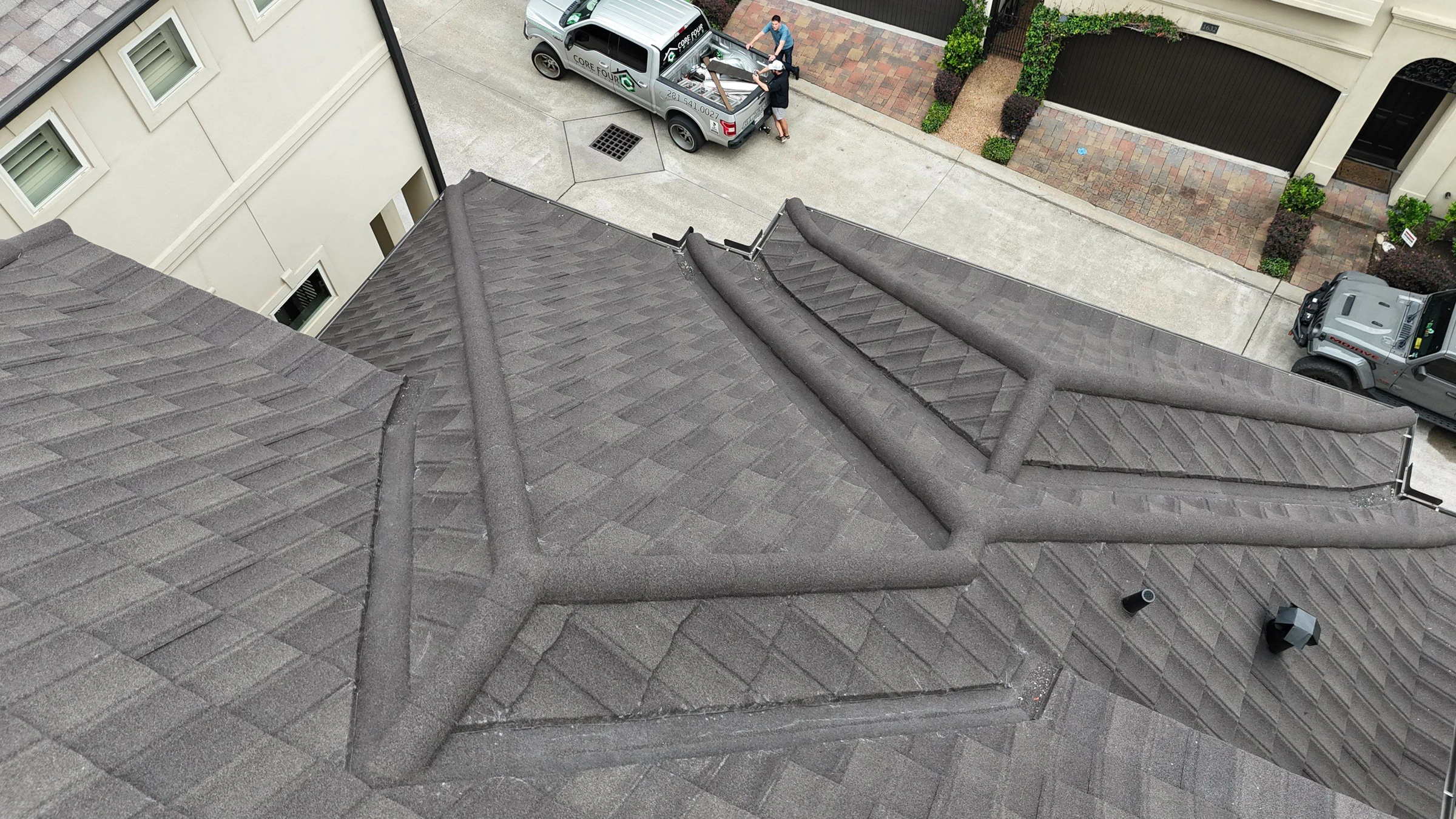
A lot of Houston-area houses were drawn for tile and then lived under it until the underlayment failed or a rafter calculation got uncomfortable. Stone-coated steel is the way to keep that profile without asking the framing to carry concrete.
What it actually is
Stone-coated steel is a steel panel pressed into a tile, shake, or shingle shape. Stone granules are bonded to the face, so from the curb it reads as tile, not as a barn. The panels lock together. The weight is a fraction of concrete or clay tile, which is why it can go back on a house that should not see another layer of tile, and on some houses that never should have had tile at all.
We install systems in this family, including DECRA. The panel is the structure. The granules are the weather face and the color. Hail can still chip granules and dent steel. It does not shatter the way a clay tile does, and you are not replacing a stack of broken field tiles after every storm.
Where it beats tile, and where it does not
It wins when the goal is the look, a lighter roof, and fewer cracked pieces on the lawn. It is the wrong conversation if the HOA requires a specific clay profile and will not approve a steel panel, or if the pitch is too low for the panel’s spec. We check both before anyone orders a square.
What the tear-off uncovers
Tile roofs often have skip sheathing or battens, not a solid deck. Stone-coated steel wants a deck that matches the panel’s fastening schedule. Sometimes that means new plywood before the first panel goes down. The bid should say so. A price that assumes the old battens are enough will change the day the tile comes off, and you should hear that on the front end.
If you are tired of broken tiles and soft underlayment, price stone-coated steel next to a tile re-deck. Request a free inspection and we will tell you which framing you actually have. (281) 541-0027.