
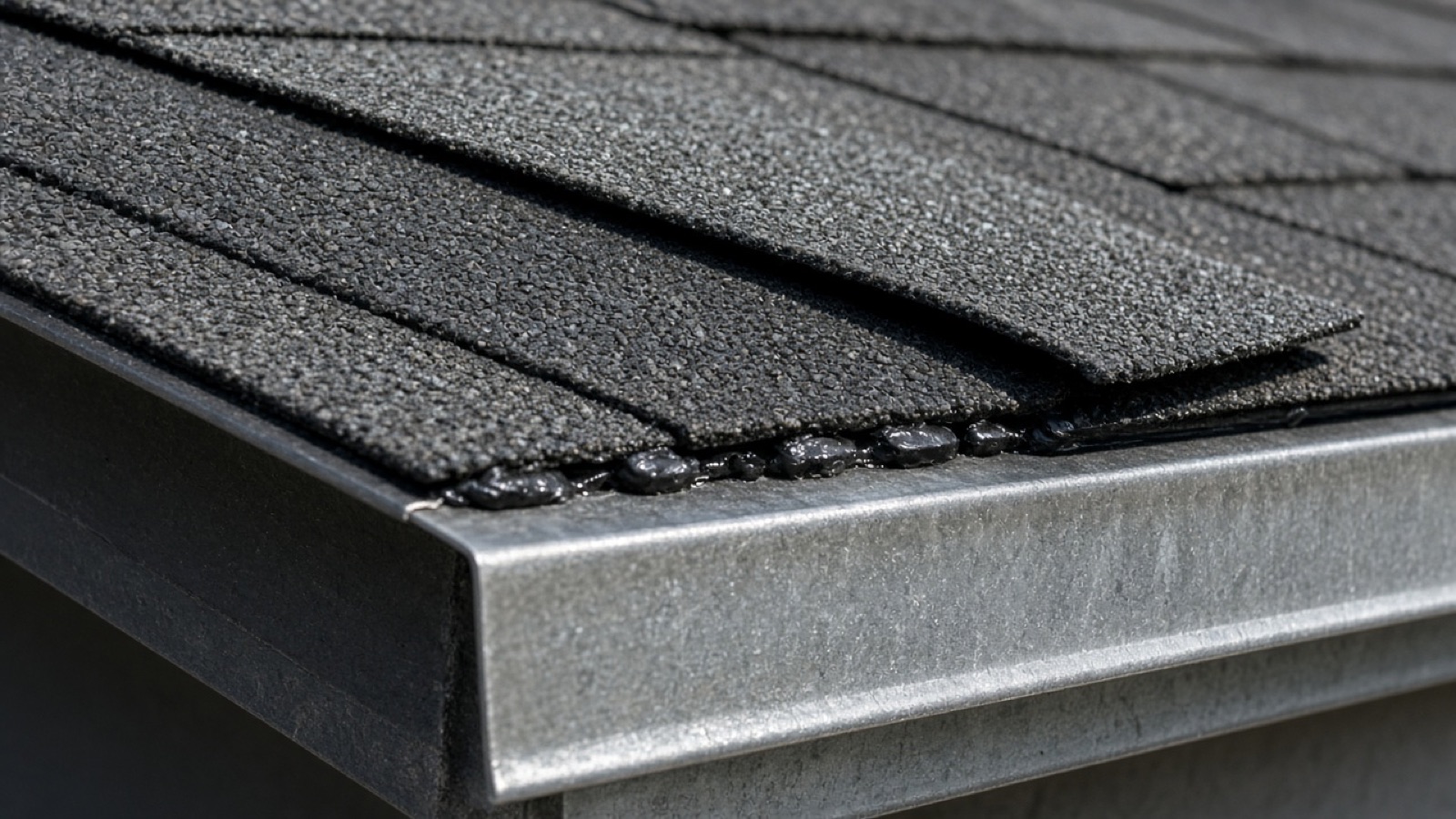
Wind does not start in the middle of a roof. It starts at an edge. The eave and the rake are where a shingle roof is either sealed or waiting to peel. The piece that seals them is the starter strip, and it is the first thing a hurried crew skips.
What the starter is for
A starter shingle is a strip with the sealant line set so the first course of shingles can bond to it. It also closes the joint where two shingles meet, so water does not run straight through the cutout onto the underlayment. A manufactured starter does this on purpose. A field shingle turned upside down can do it if the sealant ends up in the right place. A scrap with no sealant, stuck on with four nails, does not.
The same idea belongs on the rake, the sloped edge, not only the gutter line. We see roofs that were started carefully at the eave and left bare at the rake because the rake “does not hold water.” Wind does not care. A spring front coming across an open field lifts that rake edge, and the tabs unzip up the slope. Wind damage and wear is what the slope looks like after that has happened for a few seasons.
How to ask for it
On a replacement, the scope should say starter at the eaves and rakes, by name. “Installed to manufacturer spec” is fine if the manufacturer’s spec is actually what the crew does. The spec includes where the nails go. Nails too high miss the starter. Nails through the sealant line keep the shingle from bonding. Either one shows up the first windy week.
If your first course is lifted and the rest of the roof looks middle-aged, this is the place to start, not a full replacement by default. We will say which. For a roof repair or a bid you want read, call (281) 541-0027 or request a free inspection.