
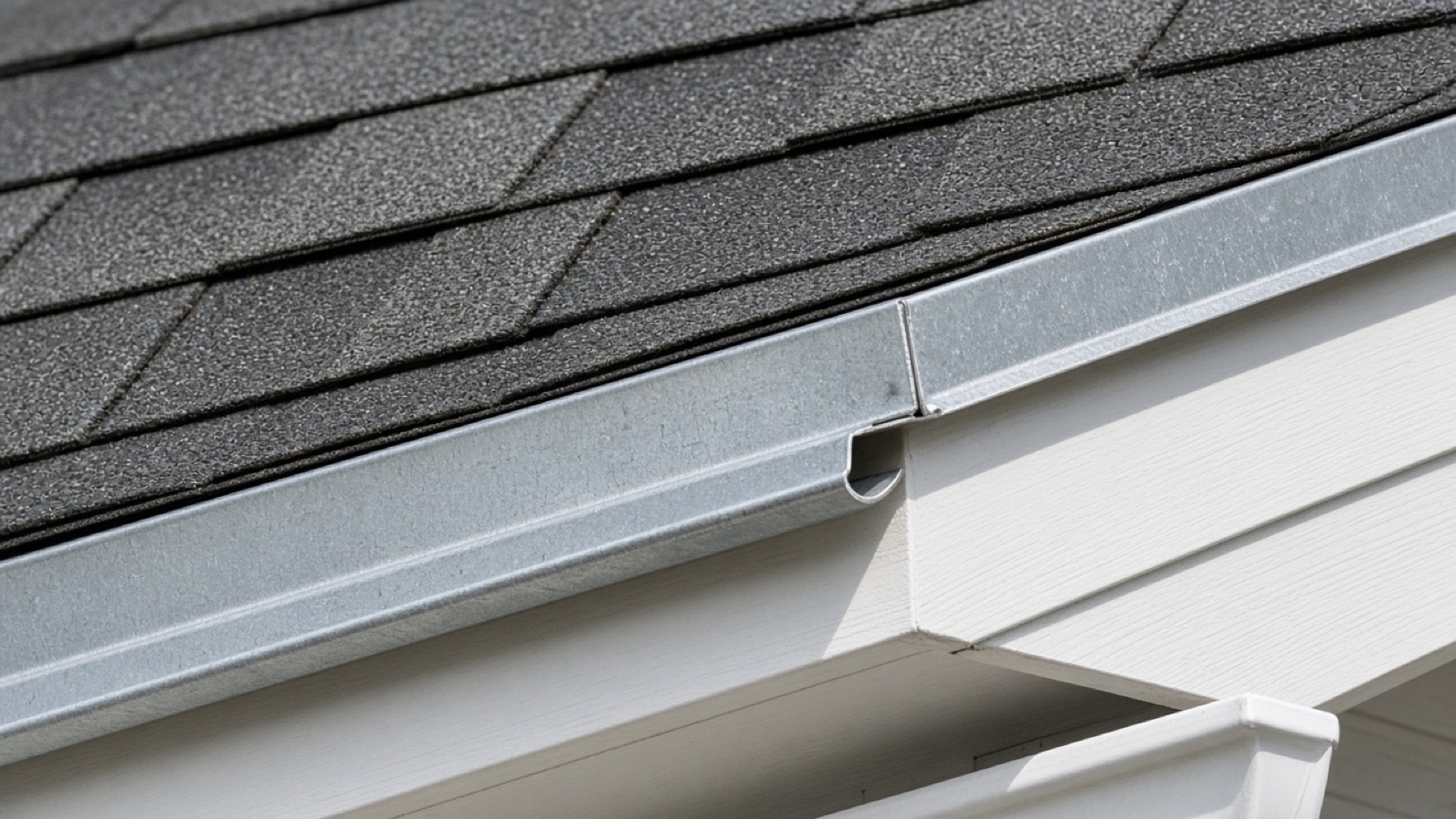
The metal lip at the edge of the roof is easy to ignore because it is an inch tall and painted to disappear. It is the piece that kicks water into the gutter and keeps wind from peeling the first course. Roofs in this area get replaced without it more often than they should. The fascia finds out first.
Eave and rake are installed differently
At the eave, the drip edge goes on the deck first and the underlayment laps over it, so water on the underlayment runs onto the metal and off. At the rake, along the sloped edge, the underlayment goes down first and the drip edge caps over it. Reverse those and you build a pocket. Wind-driven rain in a Houston storm will find a pocket.
The outer bend should extend past the fascia, not stop flush so water curls back onto the wood. Gutters hang from the fascia. They are not a substitute for the metal. A gutter full of leaves makes this worse, which is its own problem, but a roof with no drip edge stains the fascia even when the gutter is clean.
Where wind gets its start
If the starter course is weak and the drip edge is missing, wind lifts the first shingles and walks up the slope. We see that after spring fronts, usually on the eave that faces the open lot. New work gets drip edge on the eaves and the rakes, fastened on a real spacing, not three nails and a hope. On a roof installation it is a small part of the price and a large part of how the edge ages.
If your fascia paint keeps failing in a line under the shingles, look for the metal before you buy more paint. Request a free inspection or call (281) 541-0027.